


Warning

decorative image

Earaches are common in children. They are often associated with a high temperature.  Click here to see how to check your child’s temperature.

  • They are usually caused by a viral infection.  If this is the case, your child may also have a runny nose, cough or sore throat. Other people in the household may also be unwell (because viral infections spread easily).
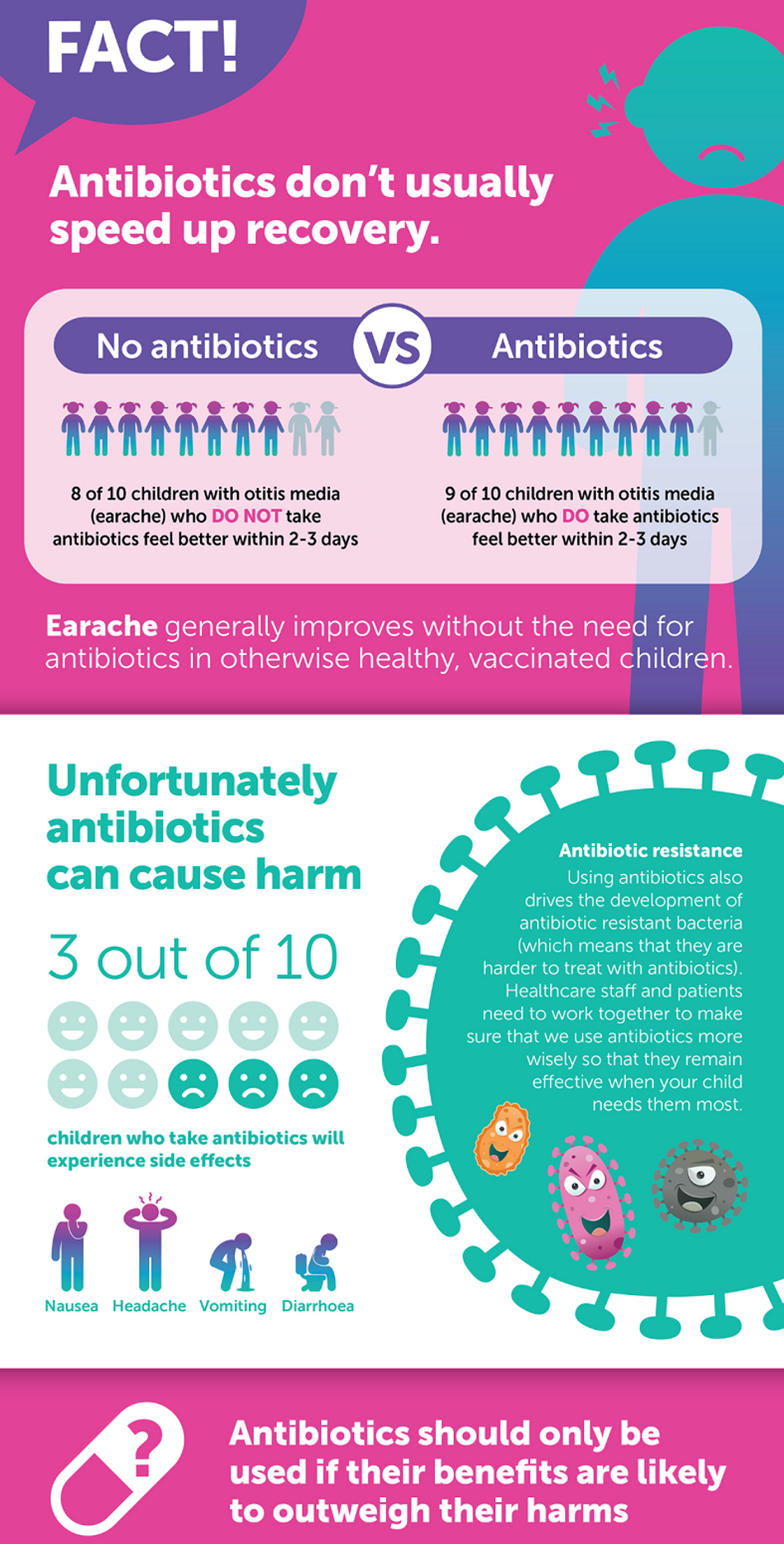
  • Viral infections tend to get better on their own. They do not need treatment with antibiotics. Antibiotics may actually cause side effects such as rash and diarrhoea and can increase the risk of them developing antibiotic resistance.


When should I get help?

Use the traffic light table to know what to do if your child is unwell.

red icon

If your child has any of the following:

  • Has blue lips
  • Has pauses in their breathing (apnoeas) or has an irregular breathing pattern
  • Is too breathless to talk / eat or drink
  • Is pale, mottled (blotchy rash) and feels  cold to touch
  • Has a fit or seizure
  • Is very distressed (crying inconsolably despite distraction), confused or very hard to wake
  • Has a rash that does not go away when you press on it (the ‘Glass Test’)
  • Is 3-6 months of age with a temperature of 39°C / 102.2°F or above (fever is common in babies up to 2 days after they have their vaccinations)

You need help now.

Go to the nearest Hospital Emergency Department or phone 999


amber icon

If your child has any of the following:

  • Has pus coming out of their ear
  • Has swelling (a lump) behind the ear, causing the ear to push forwards, or increasing pain or redness behind their ear
  • Is dizzy or is losing their balance
  • Is becoming very sleepy or irritable (you are unable to settle them with toys, TV, food or by picking up) – especially if they are still drowsy or irritable after their fever has come down
  • Has a severe headache that does not go away and neck stiffness or pain, or discomfort with bright lights (photophobia)
  • Is have breathing problems, such as fast breathing, shortness of breath or working hard to breathe (pulling in below the lower ribs when they breathe in)
  • Seems dehydrated (has sunken eyes, difficult to wake them up or has not had a wee for 12 hours)
  • Has extreme shivering or complains of muscle pain
  • Is under 3 months of age with a temperature of 38°C / 100.4°F or above (unless within 48 hours of having their vaccinations)
  • Has a fever of 38.0°C or above for 5 or more days
  • Is getting worse or if you are worried

You need to contact a doctor or nurse today.

Please ring your GP surgery or call NHS 24 - dial 111

 If symptoms persist for 4 hours or more and you have not been able to speak to either a member of staff from your GP practice or to NHS 111 staff, then consider taking them to your nearest ED.


green icon

If your child has none of the red or amber features

Self care

You can keep looking after your child at home. If you are still concerned about your child, call NHS 24 – dial 111

What should I do?

  • To make your child more comfortable, you may want to give them paracetamol (calpol) and/or ibuprofen. This not only helps with fever but also reduces pain.
  • If your child is having hearing problems or fluid is coming out of their ear, they should see a GP.
  • Encourage the whole family to wash their hands regularly to stop the virus spreading.

Antimicrobial resistance poster

How long will my child’s symptoms last?

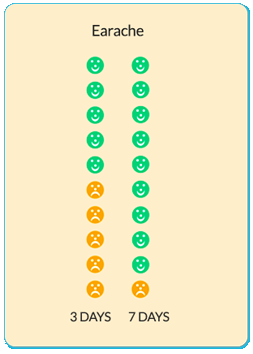
The chart shows how long earaches take to get better in children. The faces represent 10 children who have seen their GP with an earache. Green faces are those children whose earache has got better within that time period.

After a week, more than three-quarters of those with earache will be better whether they take antibiotics or not. Most (14 out of 15) who take antibiotics will get better just as quickly as if they hadn’t taken them.

The diagrams are taken from www.whenshouldiworry.com

Where should I get help?

Self Care

For wear and tear, minor trips and everything in between.

Self-care

You can treat your child's very minor illnesses and injuries at home.

Some illnesses can be treated in your own home with support and advice from the services listed when needed. Use the medicines recommended by your pharmacist or doctor. Make sure your child gets plenty of rest.

Sound advice

Children can get better from illness quickly but also can become more poorly quickly. It is important to get further advice if a child's condition gets worse.

More information on common childhood illnesses.

Local Pharmacist

Pharmacists are experts in many aspects of healthcare. They are the first port of call for minor ailments and can give advice and medication (if needed) for a wide range of long term conditions and common illnesses including coughs and colds.

Pharmacy First is a free service. You do not need an appointment and many pharmacies have a private consultation area.

Your pharmacist will let you know if you need further medical attention.

Sound advice

  1. Visit a pharmacy if your child is ill, but does not need to see a GP.
  2. Remember that if your child's condition gets worse, you should get further medical advice immediately.
  3. Help your child to understand - watch this video with them about going to the pharmacy.
Health Visitor

Health visitors are nurses or midwives who promote healthy lifestyle and prevent illness. Information can be found on the Happy Healthy Tots website, or you can download their app.

Contact them by phoning your local health visiting team.

Sound advice

Health visitors also provide advice, support and guidance in caring for your child, including:

  • Breastfeeding, weaning and healthy eating
  • Exercise, hygiene and safety
  • Your child’s growth and development
  • Emotional health and wellbeing, including postnatal depression
  • Safety in the home
  • Stopping smoking
  • Sleep and behaviour management (including temper tantrums!)
  • Toilet training
  • Minor illnesses
GP (General Practitioner)
GPs assess, treat and manage a whole range of health problems. They also provide health education. Your GP will arrange a referral to a hospital specialist should you need it.

Sound advice

You have a choice of service:

  • Doctors/GPs can treat many illnesses that do not need a visit to the Emergency Department.
  • For minor injuries such as cuts that need stitches, broken bones, sprains and minor burns in children aged 5 or over, go to one of our Minor Injury Units (MIU). 
NHS 24
If you’re not sure which NHS service you need, call NHS 24 (call 111). An adviser will ask you questions to assess your symptoms and then give you the advice you need, or direct you straightaway to the best service for you in your area.

Sound advice

Use NHS 24 if you are unsure what to do next, have any questions about a condition or treatment or require information about local health services.

Emergency Department

Emergency departments are for serious injuries and life threatening emergencies. These are things like heavy bleeding, choking and seizures.

If you’re not sure it’s an emergency, call NHS 24 (call 111) for advice.

Sound advice

Content adapted with permission from the what0-18.nhs.uk resource produced by the Healthier Together initiative


Editorial Information

Last reviewed: 22/09/2022

Next review date: 22/09/2025

Author(s): Dr Morag Wilson; Dr Geetika Kumar.