


Independence Skills

decorative image

decorative image

Children and young people need to be taught how to look after themselves. As they grow and develop most children and young people will gain independence skills. Some children and young people will continue to need adult support with some or all aspects of their personal care into adulthood. Meet your child/young person where they are. Give your child/young person opportunities to take part in these activities as part of their every day routine.

Bathing/Showering/Washing

Bathing your baby/child/young person

Babies are dependent on their carers to wash them. You can find out more about bathing your baby on:

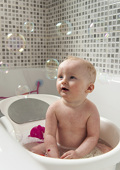
decorative imageIt is important to support your baby in the water until they can sit up by themselves. After that you need to supervise them closely whenever they are in the bath. There is equipment you can buy that will help support your baby so you have hands free to play and wash your baby. As with any equipment make sure that is meets the relevant standards and is safe to use with babies. Use a non-slip mat in the bottom of the bath and always check the temperature before putting your baby into the water.

Remember to look after yourself when bathing your baby too. You need to keep yourself safe as well as your baby. Think about ways you can avoid leaning over the bath and lifting and moving baby baths full of water.  

If your baby has additional needs then they may require specialist bathing equipment which an Occupational Therapist can recommended.

As children grow and develop they usually become more independent with bathing. Some children with additional support needs or disabilities will need help with bathing into adulthood. If this is the case for your child/young person it is important to include them in the process as much as possible. You could try:

  • offering choices - "bath or shower", "will I wash your leg or your arm first?", "which soap/sponge etc. would you like to use?"
  • breaking tasks into chunks and getting them to to do small parts - can they hold the sponge while you put the soap on?
  • following a predictable routine so that your child/young person knows what to expect next
  • using visuals to support communication and routine if that is appropriate for your child.

If your child has a disability and they need specialist bathing equipment or adaptations made to your home an Occupational Therapist can help. If you need more information about equipment or adaptations have a look at our I'm concerned about adaptations, aids or equipment page to find out who to contact.


Developing Independence with Washing

What you can do to help - for parents/carers
decorative image

To help your child/young person become independent with washing there are lots of things that you can try.

  • Have a consistent routine for bathing/showering
    • This could mean your child has a bath/shower on the same days each week or they do it at a similar time such as before school or as part of the bedtime routine.
    • It would also mean they wash their body parts in the same order each time.
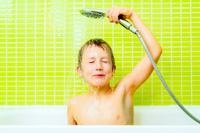
  • Make sure your child is safe in the bath or shower. Have a non-slip mat on the floor. Show them how to test the temperature of the water. 
  • Sitting down in the bath or shower can be easier as your child doesn't have to worry about balancing.
  • Teach one step at a time like opening the shower gel or shampoo, washing their face, drying their body.
  • Use visual checklists to help your child with remembering the steps of the task. Have the pictures in a place that your child can see them such as laminated and on the wall of the shower. Remind your child to look at the next picture in the sequence rather than telling them what to do.
  • Modify the task:
    • If twisting the lid off the shower gel is hard use a bar of soap.
    • If they find the feel of the shower uncomfortable or painful can they wash at the sink?


What you can do to help yourself - for young people

  • Set up a routine for bathing/showering. You could have a bath/shower on the same days each week. You could also have your bath or shower at the same time of day, for example before school or as part of your bedtime routine. You could set reminders on your phone or add getting washed to a daily timetable to help you remember.
  • Ask an adult to teach you how to test the temperature of the water in the bath or shower so that you don't burn yourself.
  • Always use a non-slip mat on the floor of the bath/shower so you don't slip.
  • Wash your body parts in the same order each time, you can use a visual checklist to make sure you wash everything.  
  • Sitting down in the bath or shower can be easier so you don't have to think about balancing.
  • Use visual checklists to help you remember the steps of the task. Have the pictures in a place that you can see. You could try having them laminated and on the wall of the shower.
  • Modify the task:
    • If twisting the lid off the shower gel is hard use a bar of soap.
    • If you find the feel of the shower uncomfortable or painful can you wash at the sink? 

There are lots of resources about keeping yourself clean, using deodorant and other personal hygiene task for young people with additional support needs on the Relationships, Sexual Health and Parenthood website.
Dressing

Like lots of other tasks children and young people need to be taught how to dress themselves. For some children and young people learning these skills will be easy. For others it will be more challenging but they will learn how to dress themselves. Some will always need support from someone else with this skill. If this is the case for your child/young person it is important to include them in the process as much as possible. Start by thinking about what is important to your child/young person and what is achievable. Meet your child where they are and help them to get involved in whatever way they can.

How to help

  • Involve your child/young person in undressing and dressing. You can do this before they can do any of the steps of dressing.
    • Talk about what you are doing.
    • Name body parts.
    • Sing songs about dressing.
    • Follow the same routine. Your child/young person will get to know what is coming next.
    • Be playful. Put their socks on your ears or on their hands. Put their pants on top of their trousers.
    • Let them make a choice about what to wear. "Do you want the blue t-shirt or do you want the red t-shirt?".
  • Start by teaching undressing. It is much easier. Let them practice taking clothes off first. Practice as part of their bedtime routine. You have more time too. Make sure to give your child/young person plenty of time. Once they can undress you can work on dressing.
  • Think about where your child is going and what they will be doing during the day and choose appropriate clothes. For example, if your child is going to nursery choose clothes without fastenings to make it easier for them to go to the toilet themselves. On PE days your child could wear a polo-shirt instead of a shirt and tie.
  • Make it easier:
    • Try loose-fitting clothing without fastenings, for example zips or buttons. Start with pyjamas or clothes that are too big. Make it fun. Let them dress up in your clothes and you try to put their clothes on. Once your child can put on baggy clothes they can try tighter fitting clothing.
    • Make sure your child/young person is in the right position for the task. Sitting on the floor, on a chair or on the bed can help. They won't be wobbling around and will be able to use their hands.
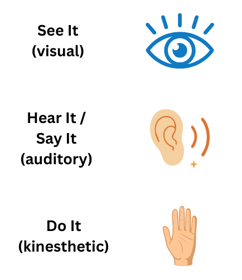
  • We all learn in different ways so you might need to try a different approach to find what works best for them. There are different types of learners below and some ideas about how you can help them to learn. Try each of these ways to find what works for your child. Sometimes you might need to use more than one of these methods. Please remember that some people cannot look and listen at the same time. You are aiming to give the least amount of support needed. If you start by physically helping your child, work towards showing them what to do. Then work towards telling them what to do.
    • decorative imageVisual learners like to watch others complete a task before or while they do it. You can show your child/young person what to do. Get dressed at the same time as your child/young person and show them what to do. You could watch a video of someone getting dressed. It can help if the video is taken from a first-person viewpoint. You can find some examples in the Watch Me Do It video library. You can give your child/young person a visual list or a photo album for different dressing tasks.

    • Auditory learners prefer to listen to instructions. Tell your child/young person. Talk them through the steps one at a time. Try recording voice notes with the steps that your child/young person can listen back to and pause as they do each step.
    • Kinaesthetic learners like to do tasks and feel the movement. Physically assist your child/young person if they are happy for you to do this. Put your hands over your child/young person's and help them to get dressed. Some people do not like this way of learning. They might prefer to put their hands over yours. If they aren't comfortable with this then stop and try something else.
  • A good way to teach your child how to get dressed is to break down each task into small steps. You can teach them the last step first (this technique is called backward chaining). Once they can do the last step of the task, teach them the second last step, then the third last step and so on. You can find out more about this further down the page.
  • If your child is struggling it can be tempting to take over - don't! Give your child time to work it out for themselves. Give them lots of encouragement and hints if you need to. If needed, talk them through what to do and only step in if they get really stuck. It is often better to practice these things when you are not in a rush. Weekend mornings are better than when you are rushing out to nursery/school/work.
  • decorative imageInstead of automatically correcting a mistake (like a twisted collar or button matched incorrectly) why not encourage your child to look in the mirror and get them to find out what's wrong. You may need to ask them some questions to help them work it out.
  • Take your time and be consistent. Learning a new skill takes time. Persevere with giving support until you feel that your child is making progress.
  • Practice, practice, practice! Give your child opportunities for practice every day.


There are other ways to help with parts of getting dressed.

Order of Dressing

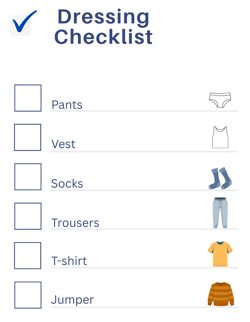
Children and young people need to learn what order to put their clothes on in. They need to know that their pants go on before their trousers. Unless they want to dress up as a superhero! You can help teach this part of the task by:

  • Talking about the order of dressing when you or your child/young person are getting dressed. Ask questions, like “What goes on next?” or "What do we put on first?".
  • Lay out clothes in the order they should go on. This is usually easier if you lay them out in a line rather than putting them on top of each other.
  • Use a visual sequence chart. You can make your own using photos or pictures or download our checklist.
  • Think about the environment. If you are laying clothes out, put them on something that acts as a plain contrasting background. Try not to put clothes onto a patterned duvet cover. Try not to put red clothes on a red carpet.
  • If your child makes a mistake, help them to work out what went wrong and how to fix it. Don't fix it for them
    • If they forget to put their pants on first let them finish getting dressed so that they find their pants at the end.
    • You can ask questions to help them figure out what went wrong.
    • You can compare what you do with what they have done.
    • You can have them look in the mirror to work out what is wrong.
    • Show them their visual sequence if they are using one.

decorative image


Putting Clothes on the Right Way Round

Putting clothes on the right way round is tricky. Most children still put their clothes on back to front sometimes when they start school. Some children can find this challenging as they move through school. As with all dressing skills it is best to start teaching this skill as soon as you can. You can help teach this part of the task by:

  • decorative imagechoosing clothes that make it easier
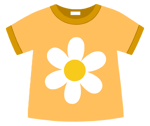
    • choose t-shirts, jumpers and pants with a picture or logo on the front. This gives an extra clue about which way round clothes go.
    • choose a coat with a different coloured lining to make it obvious which is the inside and which is the outside.
    • choose socks with different coloured toes and heels. Again this gives extra clues about which way round they go.
    • make sure the back of all garments have a label, a name tape or an iron-on sticker. You can use a permanent marker if there are no labels or if your child prefers you to cut all labels out. Remove other labels to avoid confusion, such as the labels on the side seams.
  • making it obvious
    • point out the front and back every time you child/young person puts a garment on.
    • encourage your child/young person to find the label/mark on the back before they put their clothes on.
    • lay clothes out to make it easy.
      • For garments that go on the top half - lay them on a table/the bed/floor dace down with the bottom nearest your child/young person. Encourage your child/young person to put their arms in first so they can see what they are doing and then put it over their head.
      • For garments that go on the bottom half - lay them on the floor face up with the top closest to your child/young person. Have the child sit down. The child can then hold the waistband and push their legs into the garment.
      • Now teach your child/young person to lay out this way too.
  • teaching how to turn clothes the right way round.
    • notice when things are round the wrong way. Talk to your child about how you can tell something is the wrong way round. For example, you can see the label, you can't see the picture, the seams look different.
    • next get your child/young person to tell you when they notice something is the wrong way round. Get them to tell you why.
    • practice with easier items first like socks or jacket sleeves.
    • to turn clothes round the right way:
      • put your hand in
      • pinch the end while holding the top with the other hand
      • pull it the right way round.
    • you might need to help at first.
      • you could talk them through the different steps
      • you could show them what to do by doing it beside them
      • if your child/young person is happy for you to do so you could put your hands over theirs and do it with them.
    • encourage your child/young person to help you with the washing. This will give them lots of practice. They will be able to work out when things are the wrong way rounds and then turn them the right way round.


Socks and Shoes

Socks

  • decorative imagePractice using loose fitting socks that are too big, they could even practice putting on your socks.
  • Avoid socks which have overly tight elastic at ankles.
  • Socks with different coloured toes and/or heels can make it easier for your child to get their socks the right way round.
  • Encourage your child/young person to sit when putting their socks on their feet, as they will be less likely to lose their balance.
  • It is often helpful for you to sit next to or behind your child/young person when they are completing this task as it will give you a more realistic view of what things they are finding difficult.
  • You can start by putting the socks over your child’s toes and heels and getting them to pull the socks up. Once they can do this just put the socks over their toes and they need to pull them up over their heel and all the way up.
  • Encourage your child to place their thumbs inside the sock to help them pulling the socks up or on.
  • Teach your child to gather up the sock from the top to the heel using two hands, before placing the socks on their toes.
  • Some children don't like the feeling of wearing socks and can be particularly bothered by seams, you could try turning your child's socks inside out or buy seamless socks.


Here is a video from our OT colleagues in NHS Forth Valley for helping children put on their socks.


Shoes

  • Practice with slip on shoes, slippers and wellies first.
  • Avoid shoes with fastenings to begin with.
  • It helps if you sit next to or behind your child/young person when they are putting their shoes on as it will give you a better view of what they are finding difficult.
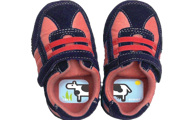
  • decorative imagePut the shoes in front of your child/young person the right way round and try the sticker trick (cut a sticker in half and stick one half in each shoe) to help them work out which shoe goes on which foot.
  • Encourage your child/young person to sit when putting their shoes on, as they will be less likely to lose their balance.
  • Get your child/young person to look at their feet to check the shoes are on the right feet.
  • Once they have mastered slip on shoes move on to simple fastenings such as Velcro or zips. You can find out more about shoe laces in the fastenings section below.


Fastenings

Learning to do fastenings can be difficult. Like many other skills children/young people need to be taught how to do this. It can take a long time to master these skills. 

Zips

Zips are usually the first fastenings that children/young people learn to do. Their first zip is usually on their jacket. Children/young people will need help to put the zip together to start with. 

  • Practice opening and closing lots of zips. Zips on pencil cases and bags are easier to start with.
  • When you start practicing zips on clothes lay the item of clothing on a table or bed in front of your child/young person. This will make it easier for them to see what they are doing. Once they can do this get them to practice with the clothing on their body.
  • Use backward chaining to teach your child/young person how to do zips:
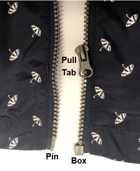
    1. decorative imageGet your child/young person to put their jacket on. You then start the zip for them. Put the pin into the box and pull the zip up a little bit. You hold the bottom of the zip. Get your child/young people to pull the zip up to the top. Practice this until your child/young person pulls the zip up every time.
    2. Now, get your child/young person to put their jacket on. You then start the zip for them. Put the pin into the box and pull the zip up a little bit. Get your child/young person to hold the bottom of the zip and pull the zip up to the top. Practice this until your child/young person pulls the zip up every time.
    3. This time, get your child/young person to put their jacket on. Get your child/young person to put the pin into the box. Your child then holds the bottom of the zip and pulls the zip up to the top.
      • This step is the hardest to teach. If your child/young person is happy for you to do so, put your hands over your child/young person's when you are teaching this bit. Be patient and only help when they get really stuck.
  • When buying clothing with zips test the zip before you buy.
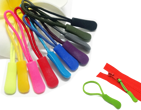
  • decorative imageMake the zip pull easier to hold. Try attaching a zip pull cord, keyring, piece of string or ribbon. This will make it easier to hold and pull.
  • If your child/young person has to do a zip on a skirt, twist the skirt so that the zip is at the front. Your child will be able to see what they are doing. Once the zip is closed twist the skirt round until it is in the right place.


Buttons

To undo and do buttons, both hands need to work together but make different movements.

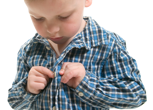
  • decorative imageStart by teaching unbuttoning first. It is easier.

  • Start with large buttons and work to smaller ones.
  • Buttons that are a different colour to the clothes make it easier.
  • Make sure that the buttonhole is large enough for the button to fit through easily. Using clothes that have been well worn helps. If the button holes are too tight for your child/young person to manage you can take the buttons off and replace them with slightly smaller ones.
  • It is easier to practice when your child/young person can see what they are doing. Laying clothes flat on a table or hanging it on the back of a chair can make it easier.
  • Push the button part-way through the hole so that it is ‘peeking’ out the other side. Ask your child/young person to pull the button the rest of the way through. Once they can do this, help your child/young person to push the button into the hole for you to pull through. Now put the two parts of the task together.


Shoelaces

Learning to tie shoelaces is hard. Learning to tie laces before you need to wear shoes that need to be tied is a good idea.

Tips for young people:

  • There are lots of different ways to tie shoelaces. Watch different videos of how to tie shoelaces. Try the way that makes the most sense to you. If that is too tricky try something else. Keep going until you find the way that is right for you.
  • Make time to practice. Don't leave it until the last minute.
  • Sit down or kneel down. Sitting on a chair or a step might be easier. If you find this difficult, you could learn and practice with the shoe on a table in front of you. Once you find this easy, try with the shoe on your foot.
  • Ask for help if you need it. It can be hard to learn all the steps in one go. Have someone help you with most of the steps and you can learn the last one. Each time your helper will do a bit less for you.

For more information download Shoelaces Information for Young People.

Tips for parents / carers:

  • Your child might prefer to tie their laces in a different way from you. You can start by teaching them to same way you do but if they are finding this difficult try different methods. There are lots of videos available showing different ways to tie laces. Try them all until you find the one that works for your child.
  • Teach one step at a time. You could try using the backward chaining technique.
  • Practice on days when you are not in a rush.
  • Get your child to sit or kneel down so they don't have to balance while they are learning to tie their laces.

This video has some hints and tips and shows you different ways to tie your laces.

Find our step by step guides below:
Initial Knot
One Loop Method
New Method
Double Knotting at the End


School Tie

As you move through school you might need to wear a school tie. You might just need a tie in school photographs or special occasions when you are at Primary School. Lots of secondary schools have a tie as part of the uniform and you might need to wear a school tie every day. It helps to be able to tie a tie by yourself so that changing for P.E. is not an issue.

Use the videos below to learn how to tie your tie.

Right handed

View our Step by Step (Photograph) Guide for Tying School Tie (Right Handed).

Left handed

View our Step by Step (Photograph) Guide for Tying School Tie (Left Handed).

If you do find learning to tie your school tie difficult then there are other things you can try:

  • Use clip on or elastic ties.
  • Ask someone to tie your tie for you the first time. To take your tie off just loosen it and slip it over your head. Now you can slip it on over your head and tighten it up.

Hair Care

decorative imageHair care involves lots of different things including brushing/combing, cutting, washing and drying. If hair care is difficult for your child/young person talk to them about why this is and what might help. This could help you to work out which strategies might work best for your child/young person. If they can't tell you then you might need to work as a detective to make a best guess and use trial and error to find the strategies that work best.
What you can do to help - for parents/carers

Modify the task:

  • Think about how you can make the task easier. If your child/young person dislikes having their hair brushed then keeping hair short or tied back/plaited means less brushing. If they don't like water in their eyes or ears can they use ear plugs or goggles. If they don't like shampoo try different types (liquid/gel, solid bar, dry/powder), different scents or unscented products to find something they like.
  • Try different tools: hairbrushes/combs including long-handled varieties, hairdryers, hair straighteners microfibre towels, hair clippers/razor, scissors, hair dryer stand or clamp.
  • Try different products liquid, solid bar, dry shampoo, conditioning bar, cream, detangling spray, leave in products, unscented products.
  • Experiment with shower versus the bath for washing hair. If you have a shower over the bath try taking the detachable hose off the hook and using it on right on your child's head.
  • Get them to sit down so they don't have to balance and do the task.
  • Teach one step at a time. Use the backward chaining method.
  • Get your child/young person to watch videos of how to do the task.

Make it predictable:

  • Set rules around how often, where, when and how you do these tasks.
  • Have a routine so that it happens in the same way every time.
  • Try using visual timetables like now and next, or a sequence chart or a visual timer so they know when it will finish.
  • Use distraction if you need to - watch a favourite cartoon or video.
  • Get them to do it themselves - being in control can make it easier to tolerate.
  • Keep all your child/young person's tools/products in one place.

Think about the environment:

  • Make sure the environment is safe, use a non-slip mat in the bath/shower, supervise your child around water, teach them how to test the temperature of the water, to keep their hands away from scissors etc.
  • Use a mirror so they can see what is happening and what are they doing.
  • Go to the barbers or hairdresser at quiet times. Getting to know the barber/hair dresser and visiting even when not getting a hair cut can be helpful for some children/young people.
  • Reduce other sensory demands - if your child doesn't like the feel of a hair cut, reduce noise, turn the lights down etc.

What you can do to help yourself - young people

  • Think about how you can make the task easier.
    • If you hate brushing your hair then can you keep your hair short or tied back/plaited.
    • If you don't like water in your eyes or ears can you use ear plugs or goggles.
    • If you don't like shampoo try different types (liquid/gel, solid bar, dry/powder), different scents or unscented products to find something you do like.
  • Try different:
    • tools like, hairbrushes and combs including long-handled varieties, hairdryers, hair straighteners microfibre towels, hair clippers/razor, scissors, hair dryer stand or clamp.
    • products like, liquid shampoo, solid shampoo bars, dry shampoo, conditioning bar, conditioning cream, detangling spray, leave in products, unscented products.
  • Experiment with using the shower versus the bath for washing hair. If you have a shower over the bath try taking the detachable hose off the hook and using it right on your head.
  • Sit down so you don't have to balance and do the task.
  • Learn one step at a time. You can watch videos of how to do the task to help you learn too.
  • Set rules around how often, where, when and how you do these tasks.
  • Have a routine so that it happens in the same way every time.
  • Try using visual timetables like now and next, or a sequence chart or a visual timer this will help you to remember all the steps in the sequence.
  • You could try doing the activity while you listen to a favourite song.
  • Keep all your tools/products in one place so you can always find them.
  • Make sure the environment is safe, use a non-slip mat in the bath/shower, learn how to test the temperature of the water.
  • Use a mirror so you can see what is happening and what you are doing.
  • Go to the barbers or hairdresser at quiet times. Get to know the barber/hair dresser and visit even when you are not getting a hair cut can be helpful for some people too.
  • Reduce other sensory demands or use sensory strategies you know help you feel better - if you don't like the feel of a hair cut, reduce the background noise and turn the lights down or use a fidget tool. 

Managing Periods

This information uses the terms daughter, girl, woman, she. We acknowledge that not all people who get periods identify with these terms.

What you can do to help - for parents/carers

Prepare your daughter well in advance of her starting her periods:

  • Read books together about the changes to her body (see resources below)
  • Show your daughter the different types of sanitary products. There are lots of options out there, disposable/reusable sanitary towels and tampons, menstrual cups and period pants. Talk about what would work best for her. Sanitary towels and period pants are usually a good starting point.
  • Once you have decided what will work best, practice using them. Practice all the steps. Remember to practice opening the product, putting it in/out of pants and disposing of it appropriately. Practice until they are confident with all the steps.
  • Some people need pictures to help them understand what to do. There are some resources below. Some products also have pictures in the instructions. You may need to put the pictures beside the toilet to remind her what to do.
  • Many girls and women find period pants to be more comfortable. They are particularly useful for anyone who physically struggles with putting in and taking out a sanitary towel or for people who have difficulty managing each step in the right order.
  • Have your child practice wearing pads or period pants from time to time before starting their periods, to get used to how it feels. Start with just a minute or two and gradually build up over time.
  • Talk about hygiene with your daughter. Talk about the importance of changing their pads/pants every few hours, showering daily, washing their hands before and after going to the toilet.
  • Keep a bin close to the toilet for your daughter to dispose of used pads/tampons. If using reusable products make sure she has somewhere to put them before until they are ready to be washed (a wet/wash bag or specific bin/bucket with a lid).
  • In public toilets show your daughter the sanitary disposal bin and how it works. Explain that this is where used sanitary towels and tampons go. Tell your daughter these will be in the school toilets.
  • When your child first starts their periods they may have accidents, or get blood on their hands, the floor or clothes. Reassure your child that this is normal. Keeping a small pack of baby wipes with their sanitary pads will help with any clean up. A change of pants/trousers and fresh pads in their school bag may also be necessary. Practise cleaning up and changing at home. Teach your child to put used wipes in the bin. Do not flush wipes or sanitary products down the toilet.
  • Help your child keep track of her/their periods by marking on a calendar when they start and end. This will help your daughter learn to predict when her next period is due so that she are prepared and has period products with her.
  • Remember to take a bag with a change of clothes and sanitary products to any clubs or activities.

Sensory Aspects of Periods

The onset of periods can be particularly challenging for some neurodivergent young people or others who have heightened sensory awareness. Periods involve a lot of new sensory experiences including:

  • the feeling of blood leaking from the vagina
  • the smell of the blood or the sanitary products (either when new or used)
  • the look of blood in pants or on toilet paper
  • the feeling of the sanitary towel or period pants
  • the fear of touching the blood
  • the feeling of stomach cramps, sore breasts or other hormone related body changes.

Your child may not be able to identify what is making them feel uncomfortable or distressed so trial and error may be required to get to the bottom of it.

Experiment with hygiene products: different brands of sanitary towels, menstrual cups, tampons and period pants, to find what is most comfortable and preferred. If appropriate for your child, treat it as a science experiment or adventure where records are kept of what has been tried, what the outcome was (good things and bad things about each product) and what is next.

Changing towels, tampons, or pants more frequently may help reduce the smell. A perfume or body spray that your child likes may help cover smells. Many disposable sanitary products are perfumed. If this is an issue, then look for unscented products or reusable products.

Using disposable gloves may reduce anxiety about touching blood – gloves that fit well are easier to use.

Have wipes available – teach your child not to flush wipes down the toilet, dispose of them in the bin.

If your child is afraid or anxious about blood, you may need to prepare them well in advance, using pictures such as those included in the resources at the bottom of this section.

If your child is struggling with severe pain, heavy periods or mood swings, discuss with your GP what would be helpful to manage these symptoms.


What you can do to help yourself - for young people

Prepare for your periods:

  • Read about puberty, what to expect and how your body might change (see resources below)
  • Try different types of sanitary products. There are lots of options out there, disposable/reusable sanitary towels and tampons, menstrual cups and period pants. Talk with a trusted adult about what you think would work best for you. Sanitary towels and period pants are usually a good starting point.
  • Once you have decided what will work best, practice using them. Practice all the steps. Remember to practice opening the product, putting it in/out of pants and disposing of it appropriately. Practice until you are confident with all the steps.
  • Some people need pictures to help them understand what to do. There are some resources below. Some products also have pictures in the instructions. You may need to put the pictures beside the toilet to remind yourself what to do.
  • Many girls and women find period pants to be more comfortable. They are particularly useful for anyone who physically struggles with putting in and taking out a sanitary towel or for people who have difficulty managing each step in the right order.
  • Practice wearing pads or period pants from time to time before starting your periods. This can help you to get used to how it feels. Start with just a minute or two and gradually build up over time.
  • Remember that hygiene is particularly important when you are on your period. Remember to change your pads/pants/tampon/cup every few hours, shower/wash every day and wash your hands before and after going to the toilet.
  • Keep a bin close to the toilet so you can dispose of used pads/tampons. If using reusable products make sure you have somewhere to put them until you are ready to wash them (a wet/wash bag or specific bin/bucket with a lid).
  • In public toilets use the sanitary disposal bin. If you need to ask a trusted adult to show you how it works. These should be used for pads and tampons.
  • When you first start your periods, you might have accidents, or get blood on your hands, the floor or clothes. This is normal. Keeping a small pack of baby wipes with your sanitary pads will help with any clean up. Have a change of pants/trousers and fresh products in your school bag. Practise cleaning up and changing at home. Put used wipes in the bin. Do not flush wipes or sanitary products down the toilet.
  • Keep track of your periods by marking it on a calendar (you can mark the start and end of your period). This will help you to learn to predict when your next period is due so that you are prepared and have period products with you.
  • Remember to take a bag with a change of clothes and sanitary products to any clubs or activities.

Sensory Aspects of Periods

The onset of periods can be particularly challenging for some neurodivergent young people or others who have heightened sensory awareness. Periods involve a lot of new sensory experiences including:

  • the feeling of blood leaking from the vagina
  • the smell of the blood or the sanitary products (either when new or used)
  • the look of blood in pants or on toilet paper
  • the feeling of the sanitary towel or period pants
  • the fear of touching the blood
  • the feeling of stomach cramps, sore breasts or other hormone related body changes.

You might not be able to identify what is making you feel uncomfortable or upset so trial and error may be required to get to the bottom of it.

Experiment with hygiene products: different brands of sanitary towels, menstrual cups, tampons and period pants, to find what is most comfortable and preferred.

Changing towels, tampons, or pants more frequently may help reduce the smell. A perfume or body spray that your child likes may help cover smells. Many disposable sanitary products are perfumed. If this is an issue, then look for unscented products or reusable products.

Using disposable gloves may reduce anxiety about touching blood – gloves that fit well are easier to use.

Have wipes available – remember not to flush wipes down the toilet, dispose of them in the bin.

If you are afraid or anxious about blood, you might need to prepare well in advance, using pictures like those included in the resources at the bottom of this section.

If you are struggling with pain, heavy periods or mood swings, discuss this with a trusted adult and your GP to find out what would be helpful to manage these symptoms.

Resources:

Nail Care

decorative imageSome children/young people have difficulty tolerating nail cutting.

What you can do to help - for parents/carers

Start by talking to your child/young person about what it is they don’t like about nail care. This will help you to work out which strategies to try. If they can't tell you you will need to be a detective and make a best guess about what your child/young person is finding distressing and use trial and error to find the strategies that work best. 

Here are some suggestions for you to try with your child:

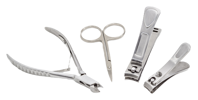
  • Try different tools: nail scissors (curved or straight), nail clippers, nail file. You might need to experiment with a few different things before finding what is most comfortable for your child. Some children take a little while to adapt to new sensations so try to use a new tool 4 or 5 times before trying the next thing.
  • Use visual supports like now and next to help your child understand what is happening.
  • Try cutting or filing nails after a bath when your child’s nails are a bit softer.
  • Break the task down into tiny steps and do one steps at a time. For example, just cut one nail.
  • Use distraction: Let them watch a favourite programme or video, sing a song together, play with a toy or listen to music while you cut their nails.
  • Sometimes it can be easier to tolerate nail care if your child/young person can cut or file their nails themselves. Teach them how to do it themselves and teach them how to do it safely.


What you can do to help yourself - for young people

Start by talking to a trusted adult about what you don’t like about nail care. This will help you to work out which strategies to try. If you can't tell what is bothering you, you will need to be a detective and make a best guess about what you are finding distressing and use trial and error to find the strategies that work best. 

Here are some suggestions for you to try:

  • Try different tools: nail scissors (curved or straight), nail clippers, nail file. You might need to experiment with a few different things before finding what is most comfortable for you. Some people take a little while to adapt to new sensations so try to use a new tool 4 or 5 times before trying the next thing.
  • Use visual supports like now and next to help you understand what is happening.
  • Try cutting or filing nails after a bath when your nails are a bit softer.
  • Break the task down into tiny steps and do one step at a time. For example, just cut one nail.
  • Use distraction: Watch a favourite video, use a fidget tool or listen to music while you cut your nails.
  • Sometimes it can be easier to tolerate nail care if you can cut or file your own nails.

Teeth Brushing

Teeth Brushing

decorative image

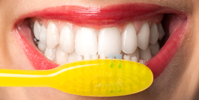
Brushing your teeth is an essential part of looking after your body. Everyone should be brushing their teeth at least twice a day. You can find out more from:

Toileting

Have a look at our toileting page for information about how you can help with the different aspects of going to the toilet.

Editorial Information

Author(s): Occupational Therapists, Specialist Children's Services.