


Attention Deficit Hyperactivity Disorder (ADHD)
 KIDS for Families

 On this page:
We know that there are natural differences between human brains. This is known as neurodiversity. Some human brains have more in common and we can group them together. Most brains are in the neurotypical group and others are neurodivergent. One type of neurodivergence or neurotype is ADHD. There is a lot of overlap between the different neurotypes, and they often occur together. It is important to understand your own, or your child or young person’s brain. Everybody has individual strengths and challenges and may need different supports.
What is ADHD (Attention Hyperactivity Deficit Disorder)?
ADHD is a lifelong neurodevelopmental difference or neurodivergence. Everyone with ADHD is different and will have a unique experience. There are some strengths and challenges which are more commonly described by people with ADHD. People with ADHD can have differences in their attention, activity levels and impulsivity.
The following video explains ADHD:
For more information look at:
- Living with ADHD from NHS Inform
- ADHD from MyApp My Mental Health NHSGGC
- ADHD explained: A 28-minute primer video from Understood
Here are some quotes from people with lived experience of ADHD:
“It’s like there is a hamster wheel in my head. And the hamster runs fast.”
“You know when you go into a room and completely forget why you went there in the first place? Its like that, but all day with everything you do."
"Or imagine throwing a bunch of different coloured bouncy balls on a trampoline and trying to focus on one.”
(Taken from ‘18 People Explain What ADHD Feels Like’).
Strengths and Challenges of people with ADHD
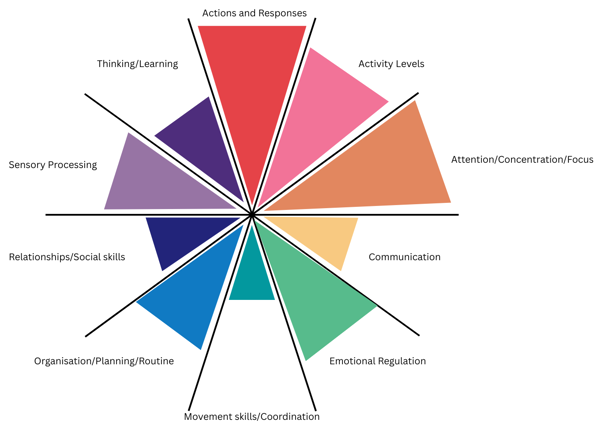
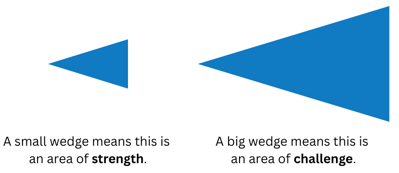
Everyone has strengths and challenges and this is the same for neurodivergent people. The neurodivergent wheel helps us to understand a neurodivergent individual’s experiences, strengths and challenges at any given time or place. Neurodivergent people thrive in the right environment with the right supports. The wheel can help to build empathy and understanding. It also helps to make sure that the right support is given at the right time.
This is an example of an individual's profile. It shows the spectrum of differences. Remember a person's profile can vary over time and in different environments.
 Impulsivity
Impulsivity is like not being able to press a ‘pause’ button. For example: not being able to stop speaking or doing things without thinking through the possible consequences. Being impulsive can be useful, for example when you need to make a decision quickly. It can also present challenges, for example shouting out in class and finding it hard to wait your turn. It can also make planning to do something that really needs to be done difficult or increase risk taking, for example running across the road without looking, picking up everything in the supermarket or pressing the fire alarm.
 Hyperactivity
Hyperactivity can include being on the go all the time. It can look like not being able to sit down or stay still when needed. It can also feel like a sense of inner restlessness, like your mind is always racing. Some people with ADHD might talk very fast and have lots to say.
Attention
 People with ADHD find it difficult to pay attention and concentrate when they are expected to. It can be particularly difficult when something is less interesting, more difficult or there are lots of other distractions. People with ADHD often get side tracked, finding it more difficult to complete things. This can be really frustrating - especially when people want to focus but just can’t seem to. People with ADHD can find it difficult to organise themselves and might lose items and forget things.
People with ADHD can experience hyperfocus. This is when you become completely absorbed in an activity or task you enjoy, tuning out everything around you. Hyperfocus can be really positive in helping get work done because you get a sense of enjoyment, achievement and satisfaction. Hyperfocus can make it difficult to move between activities.
Creativity and Enthusiasm
People with ADHD often have a creative way of thinking about the world and are good at coming up with new ideas and thinking outside the box.
People with ADHD are often enthusiastic and are fun to be around. This often means they are good at motivating others to join in.
What you can do to help
Activity Levels and Energy
- Make sure that children and young people with ADHD take lots of movement breaks.
- Help other people understand your child or young person’s movement needs.
- Doing activities in different positions can be helpful. Try kneeling, standing or lying.
- Using “active sitting” equipment can help when people with ADHD have to sit down. Lots of children and young people have told us that wobble cushions, wobble stools, exercise balls or putting a resistance band around the legs of the chair can all help.
- Using fidget tools can help to keep hands busy. You could try a pen top, a key ring, lump of blue tac, a bracelet/wrist band, elastic band or hair bobble. Anything that keeps hands busy but doesn’t become more interesting than the task that needs to be completed.
- Exercising earlier in the day can help to use up energy.
- Calming strategies can help with switching off at the end of the day. Your child or young person could try dimming the lights, playing some relaxing music or ambient (brown) noise or having a bath.
- Think about what your child or young person is eating and when. Are food and drinks high in caffeine or sugar affecting their energy levels?
- Getting outside regularly can help with sleep and mood. Try to get your child or young person outside at least once a day
Attention and Hyperfocus
- Understand which activities keep your child or young person hooked for a long time. Only let your child or young person do these activities when they have enough time to spare, or if it helps with school work.
- Use timers, reminders and alarms.
- Turn activities that your child or young person finds boring into a game.
- Encourage your child or young person to write things down, try a to do list or make a plan.
- Have a place at home for things you don’t want your child or young person to forget or lose. Decide together where to put things like keys, school books, phone, etc.
- Try body doubling (working with a partner). Look at ADHD Body Doubling: How To Get Things Done from Simple Psychology.
For more ideas and information to help with getting things done look at
- our attention and listening page for primary school age or for secondary school age.
- our organisation skills page for primary school age or for secondary school age.
Impulsivity and Risk Taking
Be understanding that brain-based differences can make people with ADHD more likely to be impulsive. Children and young people with ADHD often need more time and help from adults to develop impulse management and emotional regulation skills.
Children and young people with ADHD might need adult support to think through decisions and risky situations. You could try using comic strip conversations to support your discussion.
For more information look at:
- What are Comic Strip Conversations? from Whittington Health NHS Trust
- Comic strip conversations and social stories from Bedfordshire and Luton's Children's Speech and Language Therapy Service
Having visual reminders of rules and expectations on show for children and young people with ADHD can help them with managing impulses. Be clear about what actions you want to see, rather than focusing on what not to do, so children and young people know what they can do.
Children and young people with ADHD are likely to need more adult support with identifying and managing big emotions. You can help by identifying triggers and noticing signs of escalation. Help them by naming their emotions and letting them know that what they are feeling is ok. Help them to use strategies to manage their emotions and control their impulses like taking deep breaths, counting to 10 before responding, and grounding activities.
Be a good role model – show and talk to children and young people with ADHD about how you manage your emotions and avoid reacting to things impulsively, talk them through how you make decisions, and demonstrate how you make amends when things go wrong.
Children and young people with ADHD who struggle with impulsivity often get a lot of negative feedback from other people. Remember to recognise and praise them when you can see they’re trying their best or they’ve done a good job.
Local and National Resources
- ADHD Glasgow ADHD Parent Support West Glasgow are a parent led group supporting families affected by ADHD in and around Glasgow. They offer
- parent workshops with youth club
- closed Facebook forum
- one to one peer support by phone, email or face to face
- ADHD training workshops for school, sports clubs and after care provision.
- DIFFERabled offer a range of services and support to improve the overall wellbeing of our neurodivergent community and their families.
- ADDitude Magazine
- Online Support groups:
- Local support groups in Scotland from Scottish ADHD Coalition
- ADHD Support Group for Parents from ADHD Aware
- What is it like to parent a child with ADHD? from BBC Bitesize
- ADHD UK